
What is Horsehair Trim?
If you have ever wondered how a wedding veil gets that beautiful, sculptural edge, or how a bridal skirt can hold a graceful curve instead of simply falling flat? You may be looking at a dressmaker's oldest secrets: crinoline horsehair trim.
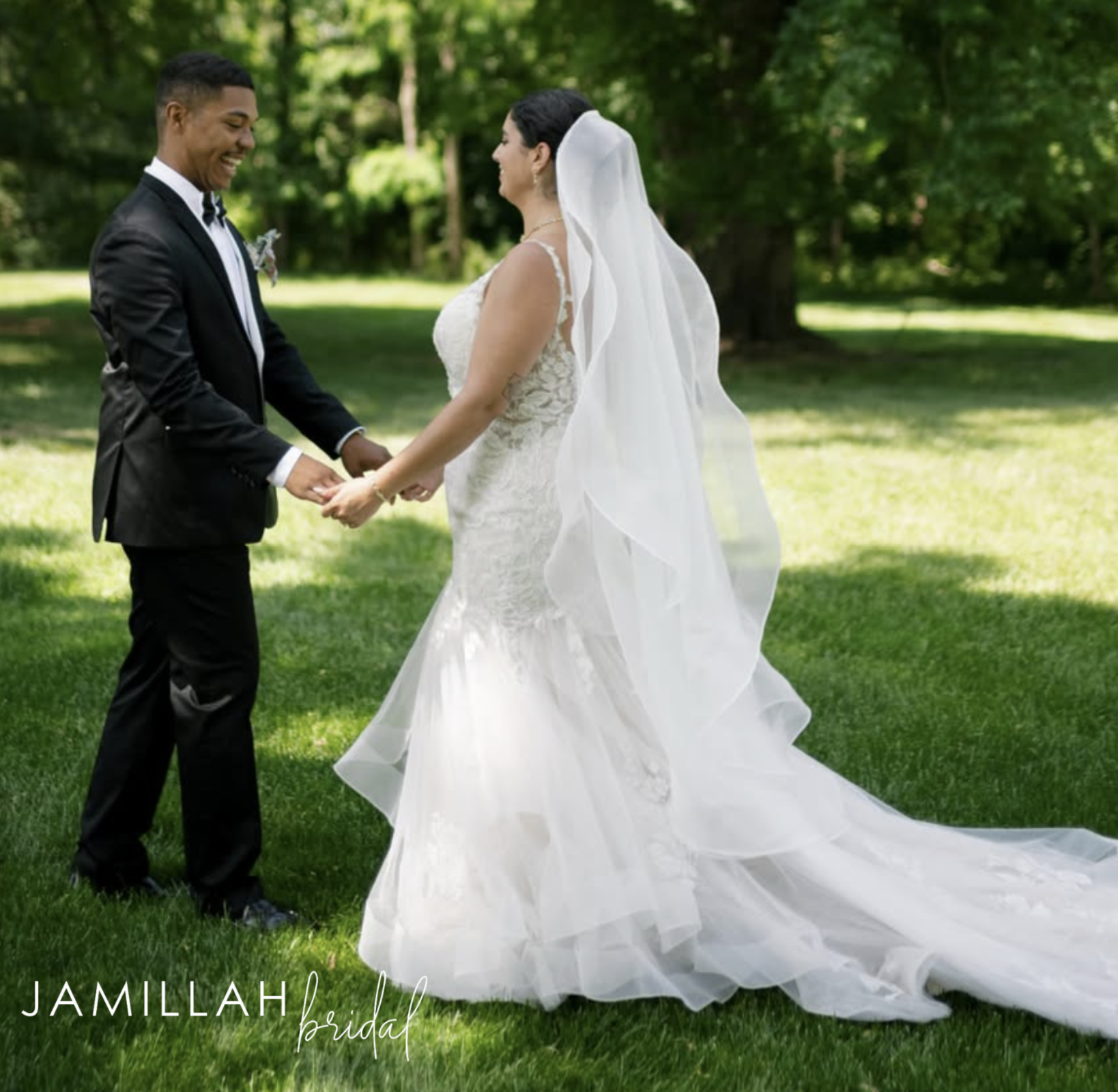
A lightweight 20 GSM horsehair trim was used on this custom wedding veil and can be seen along the hemline of the dress.
Despite its name, the “horsehair” trim used in modern bridal gowns and veils does not actually contain a horse’s hair. (It’s vegan! No animals were harmed in the making of this amazing bridal trim!) Today, what dressmakers commonly call horsehair braid, horsehair trim, crin, or crinoline trim is usually a lightweight, open-weave synthetic material made from nylon or polyester.
Horsehair is one of those small construction details that can add a beautiful finish to your veil or wedding gown. It can give a hem body and fullness, help a skirt maintain its shape, and can create that beautiful movement that can make your wedding gown or veil look unforgettable. It is important to remember, not all horsehair is created equal. The weight, filament, width, stiffness, and weave all matter. Let's dive deeper into everthing you need to know about horsehair trim!
What is Horsehair?
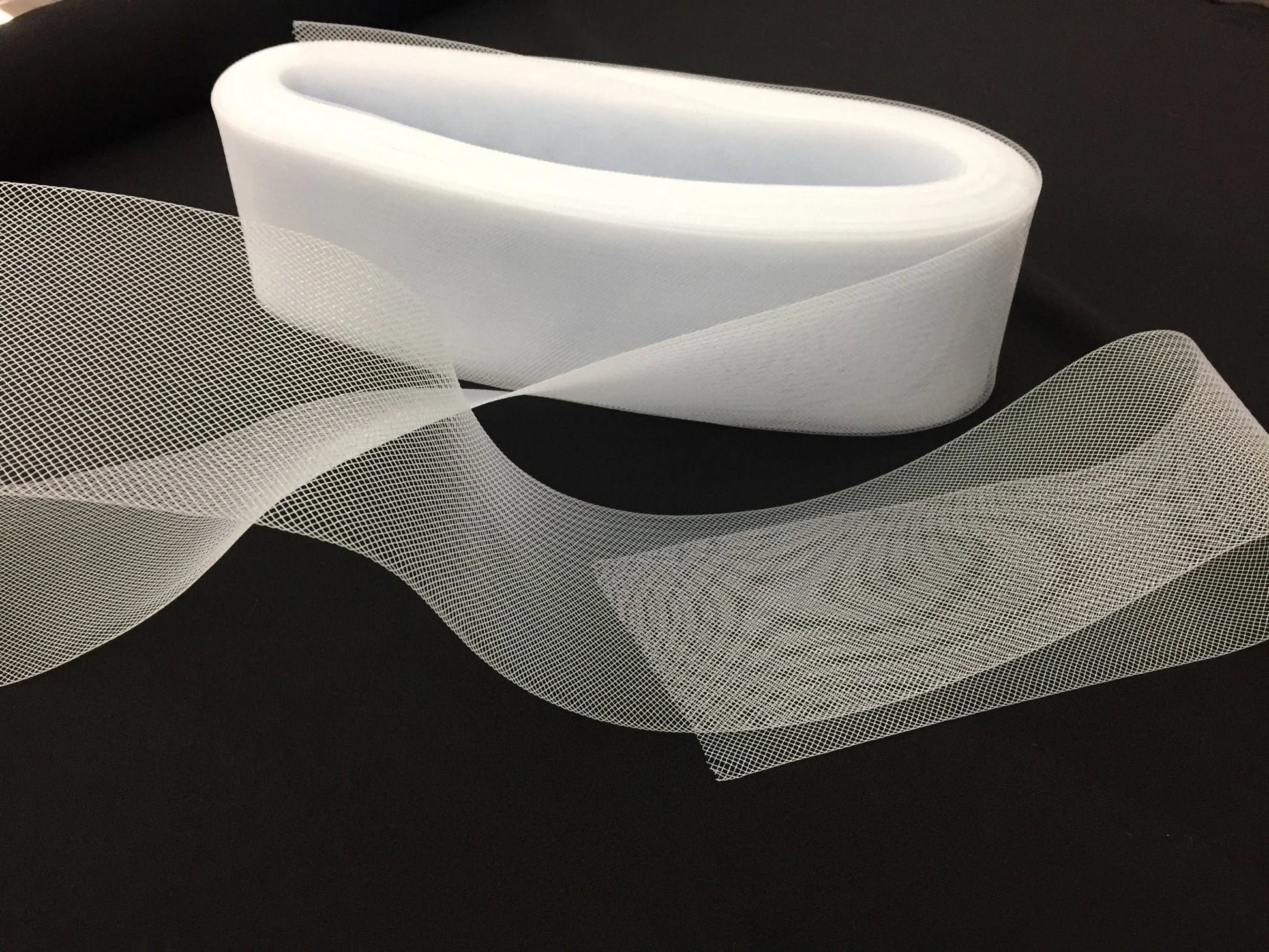
Horsehair braid is a narrow, flexible structural braided trim that is sewn into the bottom edge or hem of a garment. You may have seen it sewn inside the hem so that it is hidden. On tulle fabrics, transparent organza or sheers, however, the trim may be visible. This is why the weight, width, transparency, and color of the horsehair matter. It is especially useful for wedding dresses, evening gowns, full skirts, ruffles, peplums, costumes, and veils. This trim creates a little bit of architecture at the bottom edge of the fabric. Instead of allowing the hem to collapse completely against the body, horsehair can help:
Hold a curved or flared shape
Create volume and movement
Keep a circular skirt from becoming flat
Stabilize a hem
Give your wedding veil a graceful, sculptural edge
Add body without using bulky interfacing
Support heavier fabrics
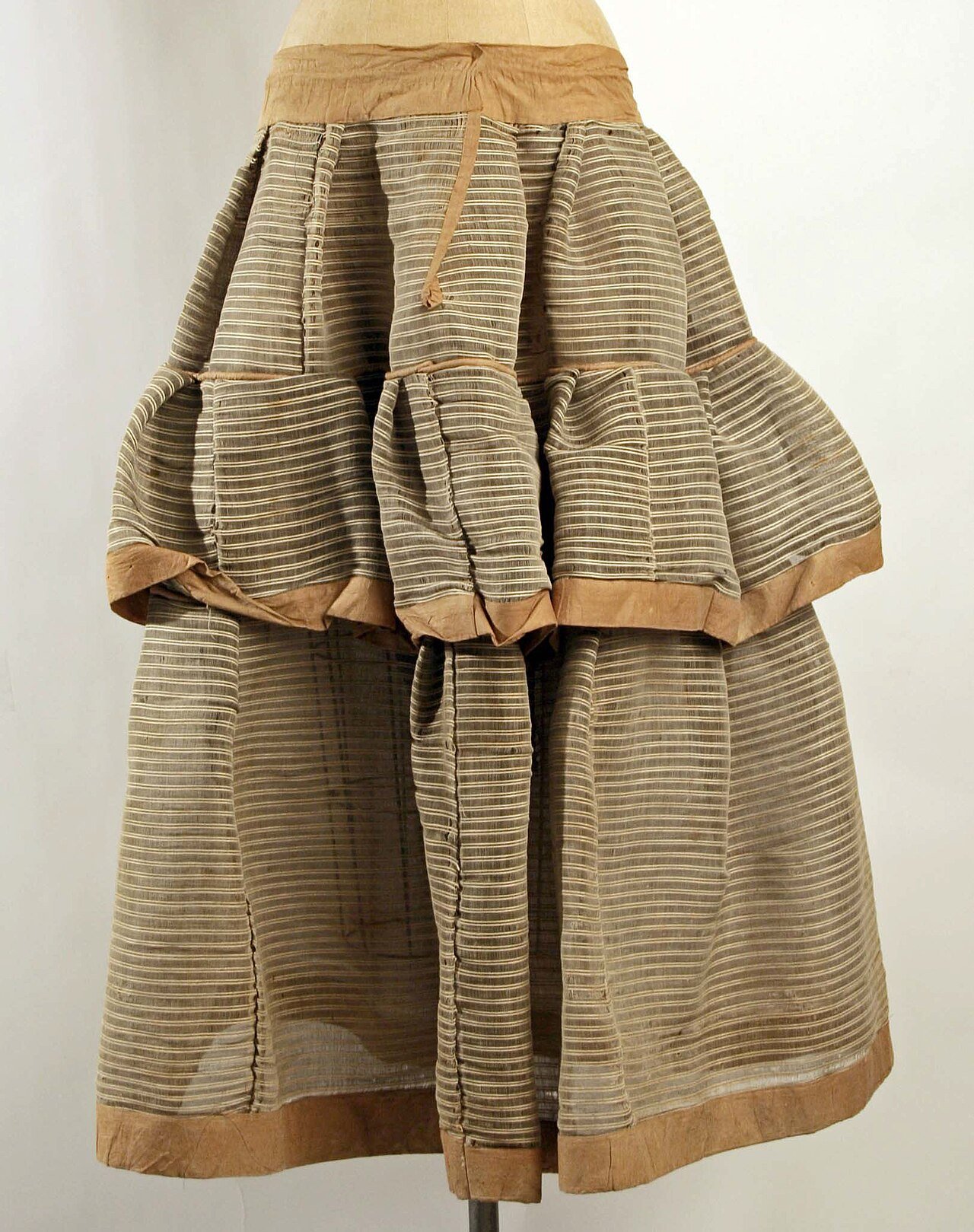
How Horsehair Got Its Name
Crinoline horsehair braid gets its name from the material it was originally made from: the coarse, springy hair of horse manes and tails. The word "crinoline" itself comes from the French crin (horsehair) and lin (linen or flax), because the earliest crinoline fabric was a stiff cloth woven using a horsehair weft and a linen or cotton warp. Actual horse hair was ideal for this because the long, thin strands are strong, resilient, and naturally hold their shape, so the fabric and braid gave structure to garments without adding much weight. Narrow braided strips of the same material were later developed to finish and support hems, which helped skirts, petticoats, and eventually bridal gowns hold a crisp, flared, or ruffled edge. Today most "horsehair" is made from nylon or polyester monofilament, which is cheaper, more consistent, and washable, but the name stuck because the product does the same job the original did and the trade kept using the traditional term.
Choosing the Right GSM of Bridal Horsehair
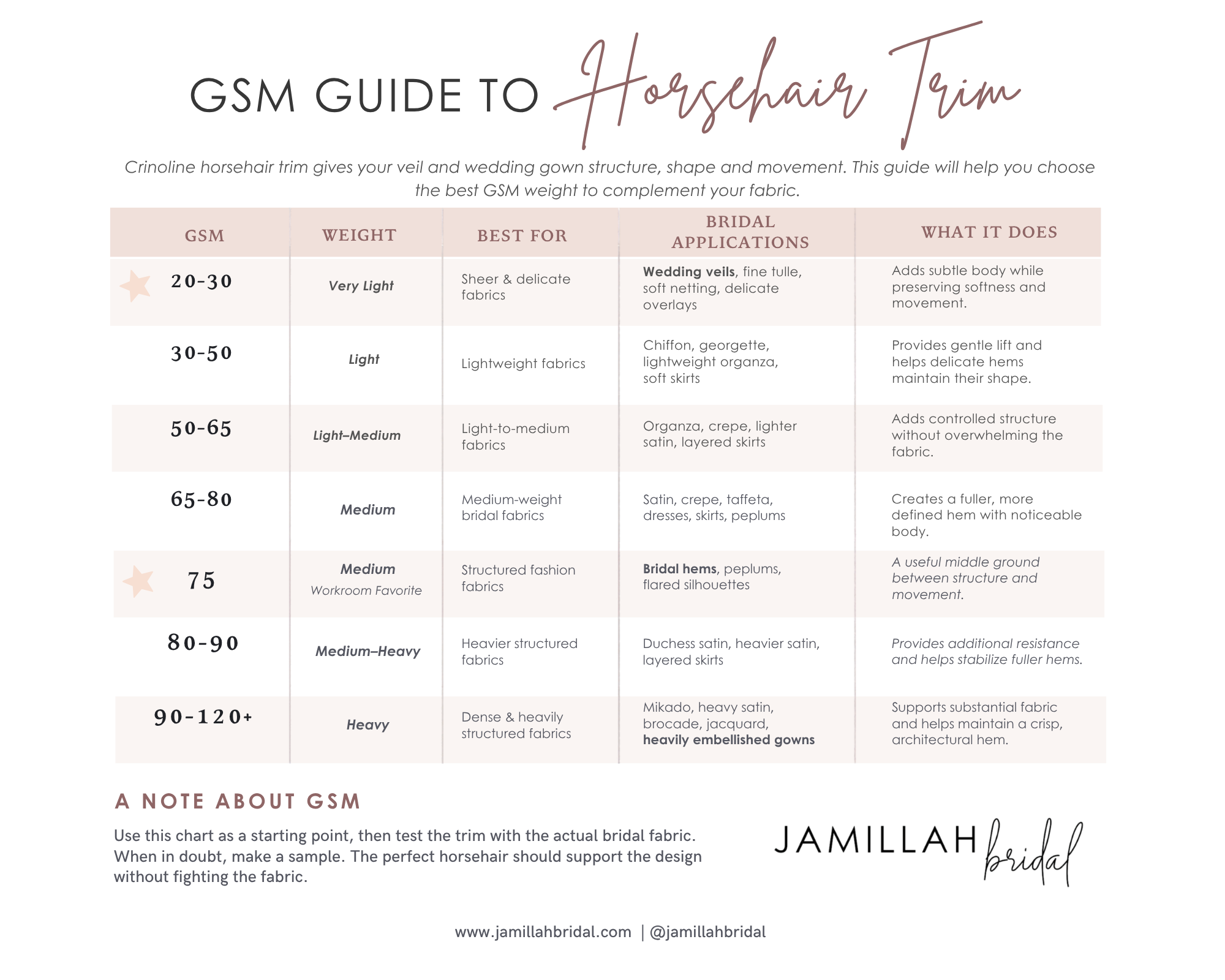
GSM refers to the grams per square meter and tells you how much a textile weighs over a defined area. Generally, a higher GSM means more material by area, therefore a heavier textile. Similarly, a lower GSM is used for a lighter-weight. (However, GSM alone does not tell you exactly how stiff, thick, soft, or durable any particular textile will be. Weave construction, filament size, density, finishing, and fiber type all affect how the material behaves.)
There is no single universal GSM scale that every horsehair manufacturer uses, and often you will see it labeled as “light”, “medium” or “heavy” when shopping online or in stores. Remember, GSM should be used as a guide, and not a substitute for feeling the weight with your hands. It is important to use your best judgement when choosing trim!
The following chart is best used as a practical bridal sewing guide when comparing materials and testing samples:
Some of the most important details in bridal sewing are the ones no one ever notices. A cascading veil that floats behind a bride, a satin skirt that holds its curve, a peplum edge that keeps its flare — beneath each of these hemlines, a simple strip of horsehair braid is quietly doing its job. That's what good garment construction is really about. It really goes beyond making your wedding gown simply fit, it means understanding the fabric, silhouette, and knowing what a design needs to hold its shape.
Leave a comment if you have ever used horsehair braid! Which GSM worked for you?
Happy bridal sewing!
XOXO,
Jamillah